Sash vs Horn Sash Windows: What’s the Difference?
The main difference between sash windows and horn sash windows is the addition of features known as sash horns. While both styles share the same traditional sliding operation, sash horns can significantly affect a window’s appearance and help recreate the character of period properties.
What Is a Traditional Sash Window?
A traditional sash window features two glazed panels, known as sashes, that move vertically. Depending on the design, homeowners can open one or both sashes, controlling ventilation without the window opening outwards. Sliding sash windows became a defining feature of British architecture, appearing in Georgian, Victorian and Edwardian homes.
Traditional timber sash windows evolved as glazing technology and architectural preferences changed. Early designs commonly featured multiple smaller panes of glass separated by glazing bars, while later windows incorporated larger panes and additional structural detailing. Modern uPVC sash windows recreate this classic appearance while offering contemporary thermal efficiency, security and low-maintenance performance.
What Is a Horn Sash Window?
A horn sash window is a traditional sliding sash window with small extensions projecting below the meeting rail at the bottom of the upper sash. These extensions, known as sash horns, were historically added to timber window construction to provide extra strength.
Today, sash horns remain a recognisable feature of Victorian and Edwardian window designs. Their distinctive appearance helps modern replacement windows recreate the proportions and traditional craftsmanship associated with historic timber sashes. Sash horns can vary in shape, from subtle straight extensions to more decorative curved designs.
Why Were Sash Horns Originally Used?
Sash horns were introduced to strengthen timber sash windows as larger panes of glass became increasingly common during the 19th century.
Earlier sash windows typically featured multiple smaller panes divided by glazing bars. These bars helped support the window structure; however, improvements in glass manufacturing allowed larger panes to replace traditional multi-pane designs. As glazing bars were reduced or removed, the joints between the meeting rail and vertical stiles became more vulnerable to additional strain. Sash horns extended the timber stiles below the meeting rail, reinforcing the connection and helping support the heavier sash.
Sash Windows vs Horn Sash Windows: Key Differences
The main difference between sash windows with and without horns is their appearance and historical styling, not their opening mechanism.
| Feature | Sash Windows Without Horns | Horn Sash Windows |
| Appearance | Simple, uninterrupted sash profile | Distinctive extensions below the upper sash |
| Traditional associations | Common in Georgian designs | Common in Victorian and Edwardian designs |
| Original construction | Glazing bars helped support the meeting rail | Horns helped reinforce timber joints |
| Modern operation | Vertical sliding | Vertical sliding |
| Modern purpose | Traditional styling | Additional period detailing |
Neither design is automatically more energy efficient or secure. The performance of a modern sash window depends on its glazing, frame construction, seals, hardware and overall specification.
Which Style Is Best for Your Property?
Georgian Sash Windows
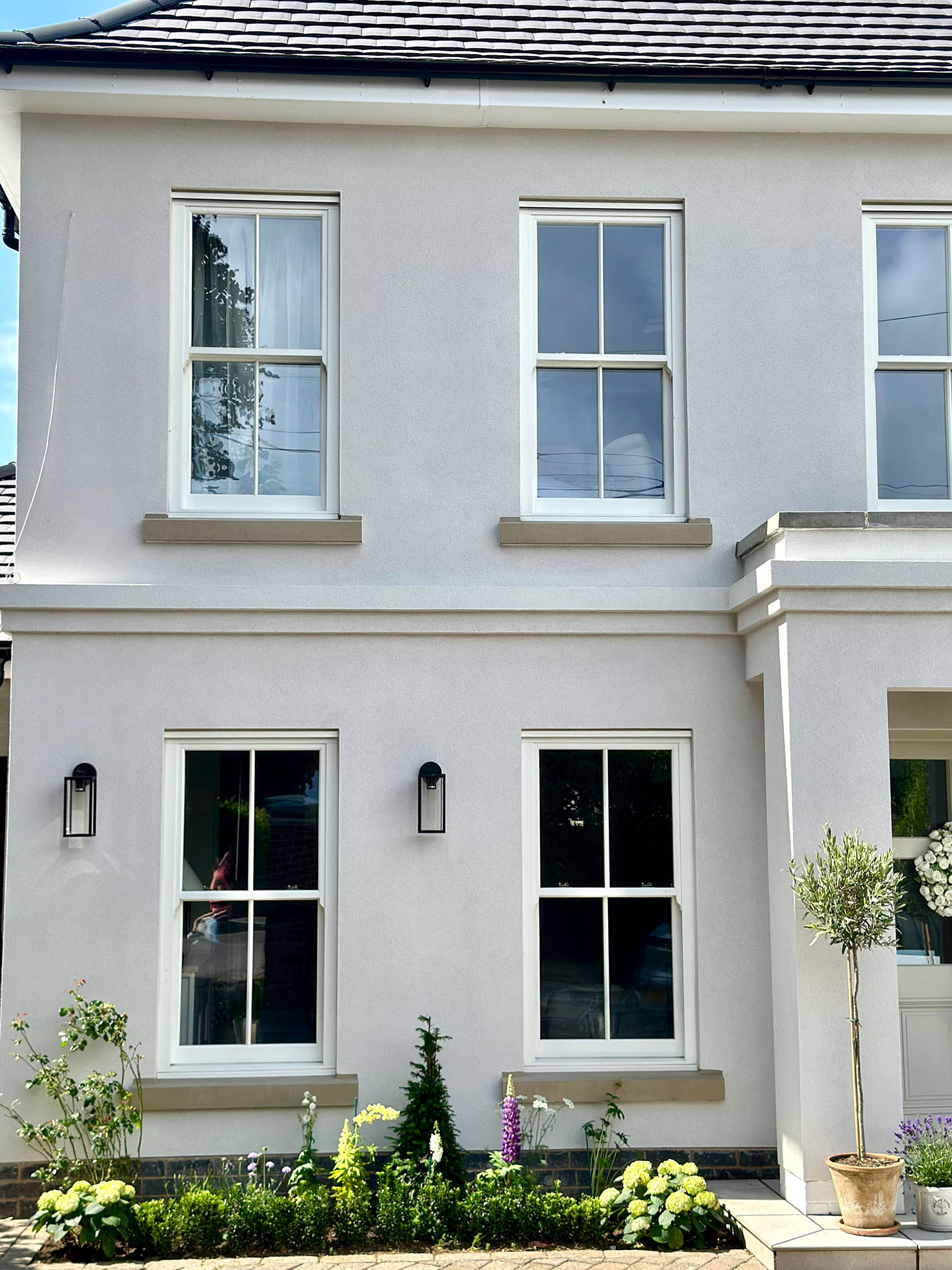
Georgian sash windows commonly feature a six-over-six glazing arrangement with no sash horns. Their even proportions and multiple smaller panes reflect traditional Georgian window designs. For homeowners seeking an authentic Georgian appearance, a simple no-horn configuration may be more appropriate than an ornate Victorian-style design.
Victorian and Edwardian Sash Windows
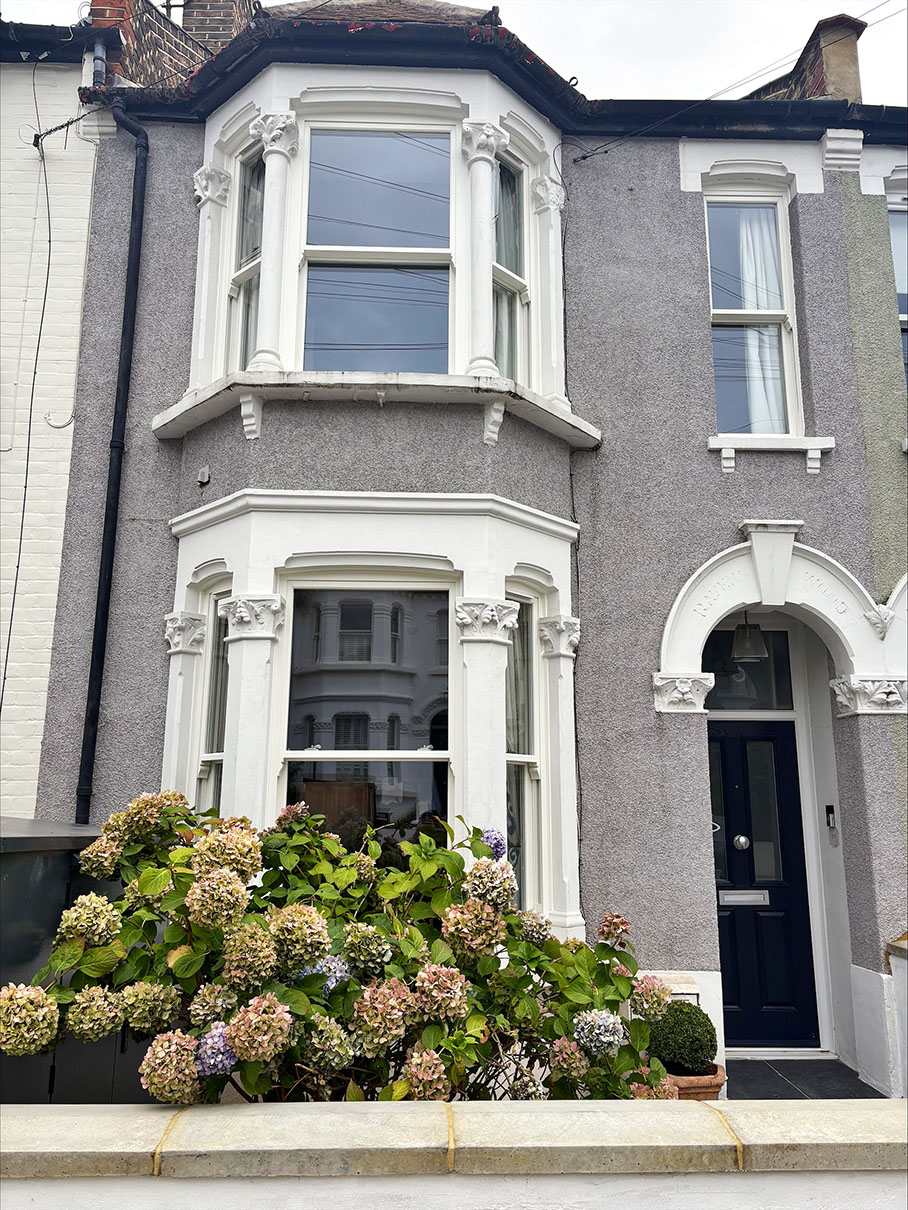
Victorian sash windows often had larger panes of glass, typically arranged in two-over-two configurations. Sash horns became an important structural and decorative feature as these glazing arrangements developed. Edwardian windows often combined traditional glazing-bar patterns with larger panes and decorative horn detailing. For either period, choosing an appropriate sash horn profile can help replacement windows retain the original building’s character. These are typical historical characteristics, not fixed rules. The original windows and surrounding architecture should guide the final specification.
Can Modern uPVC Sash Windows Have Sash Horns?
Yes. Modern uPVC sash windows can incorporate sash horns to reproduce traditional timber detailing without relying on the horns for structural support. Roseview’s Rose Collection includes sash horn options across Ultimate Rose, Heritage Rose and Charisma Rose, allowing homeowners to tailor their windows to different property styles. Ultimate Rose offers several distinctive seamless configurations, including the standard Dolphin horn, the curved Seahorse design, the more prominent Emperor horn and a no-horn alternative. Its seamless construction helps recreate the continuous look of traditional timber joinery without the visible cap lines found on some conventional uPVC sash horns.
Homeowners can also customise their windows with glazing bars, colours, finishes and traditional furniture to create a coordinated design. Explore the Ultimate Rose sash window range to discover the available horn styles and finishing options.
Choosing Between Sash and Horn Sash Windows
Choosing between sash windows with or without horns is primarily a matter of architectural suitability and personal preference. A design without horns may complement the restrained appearance of a Georgian townhouse, while a horn sash window can recreate the decorative character of a Victorian or Edwardian property.
For conservation-sensitive projects, consider the original window design and any applicable planning requirements before replacement. The Rose Collection offers traditional and contemporary sliding sash window designs, helping homeowners strike the right balance between authenticity and modern performance.
Explore our sash window range, design your preferred configuration, or find a Roseview-approved installer to discuss the best style for your home.
Categories: Rose Collection, uPVC Sash Windows